
Your Gym Journal, Built Into Every Workout
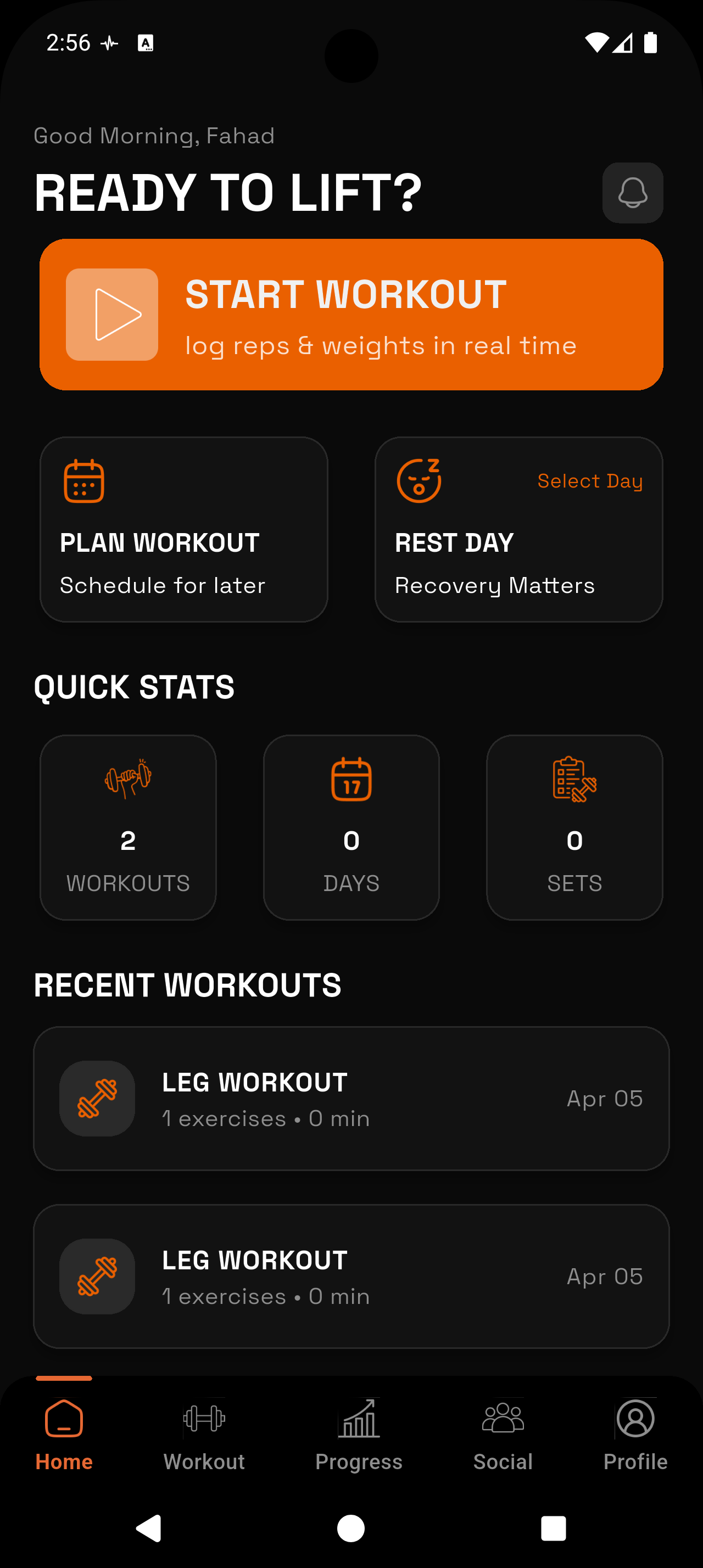
RepTally lets you record the full picture of a session — not just the numbers, but how the session felt, what your form was doing, and what to adjust next time. Free on iOS and Android.
_1783546723734-CXKxCrzf.webp)
Notes Where You Need Them
Add a note to any exercise or to the workout as a whole. Record a form cue you want to remember, flag a joint that felt off, or mark why you stopped a set short.
Set-by-Set Context
Mark each set as a warmup, working set, or failure. When you look back at a session weeks later, you know exactly what each set represented — not just the load.
Automatic PR Detection
RepTally flags new personal records as you log, so you can note what conditions led to a PR: sleep, warm-up, cue, or anything else worth writing down.
Full Session History
Every past workout is stored and searchable. Pull up any session and read through your notes exactly as you left them — useful before repeating a program cycle.
Offline-Ready
Basement gym, no-signal box, or a facility that blocks data — RepTally logs everything offline and syncs when you reconnect. Your journal entries are never lost.
Bodyweight Alongside Your Lifts
Log your bodyweight on the same day as a session. Knowing where your bodyweight was when you hit a strength PR is the kind of context that matters over a long training block.
How It Works
Start a workout and pick your exercises
Open RepTally, start a session, and add the exercises you are running that day. You can pull from a saved routine or build the session on the fly.
Log each set with full detail
Enter weight, reps, and tag the set as warmup, working, or failure. That tag is your shorthand — it tells the story of the set without needing extra words.
Add a note to any exercise mid-session
Tap the notes field on an exercise to write down what you noticed: a cue that clicked, a weight that moved better than expected, or pain you want to monitor.
Leave a session-level note before you finish
Before closing the workout, add an overall note. Energy levels, sleep the night before, what you would change, anything that gives future-you useful context.
Review past entries before repeating a block
Open your workout history and read back through prior sessions of the same program. Your notes surface the kind of detail that raw numbers alone never capture.
Why the Numbers Alone Are Not Enough
A workout log that only shows weight and reps is useful — but incomplete. If you pulled 405 for five reps six months ago and you are stuck at 405 today, the spreadsheet cannot tell you why. Was your technique different? Were you heavier? Did you grind every rep, or did it move fast? That information only exists if you wrote it down.
A gym journal fills in what raw data misses. It gives you a record of the subjective side of training: how hard a set actually felt, whether your lower back was tight coming into a session, what cue you were using when a lift finally clicked. Over a long training career, that qualitative record becomes as valuable as the performance data next to it.
RepTally keeps both in the same place. Every session has a notes field, and every exercise within a session has its own notes field. You are not jumping between a spreadsheet and a notes app — everything stays together.
What to Actually Write in Your Gym Journal
Most lifters skip notes because they do not know what to write. Keeping it simple is the answer. You do not need a paragraph for every session.
- Energy and readiness: "Felt flat today, low sleep" or "felt sharp, weight moved easy" is enough.
- Form observations: note what you were thinking about on a lift — "stayed tighter through the descent" or "hips shot up early on third rep."
- Pain or discomfort: flag anything worth monitoring. "Left shoulder slightly achy during pressing" costs five seconds to write and could prevent a bigger issue.
- Weight jumps: if you tried a new weight and it felt easier or harder than expected, write it down so you know where to start next time.
- Why a set ended: if you stopped a set before hitting your target reps, mark it as a failure set and add a note. This is how you distinguish "I chose to leave reps in reserve" from "I failed because I rushed the warm-up."
- Anything you want to try next session: "try closer grip," "use belt next week," or "add five pounds and aim for six reps."
Set Tags: Built-In Shorthand for Context
RepTally lets you label each set as a warmup, a working set, or a failure. This is a simple feature that adds a lot of meaning to your exercise history. When you look back at a session, you can immediately see how the session was structured — how many warmup sets preceded the working sets, whether you fell short on any set.
Marking a set as a failure is not discouraging. It is honest record-keeping. Knowing you failed on your fourth working set tells you where your conditioning broke down. Combine that with a note about why — grip fatigue, form breakdown, ran out of steam — and you have something actionable.
These tags also affect how RepTally reads your progress. Working sets and warmup sets are tracked separately, so your volume and strength charts reflect real training load, not warmup weight inflating the numbers.
Using Your Journal Before and After a Program Cycle
A gym journal becomes most useful when you are about to repeat a training block. Before starting a new cycle of the same program, reading back through your notes from the previous run gives you a roadmap. You can see which sessions went well and which were rough, what load you started and ended at, and what you would do differently.
This kind of review is hard to do with a plain spreadsheet. Numbers do not explain themselves. But a note like "felt undertapered going into the final week — was still sore from the week before" tells you something specific you can act on when programming the next deload.
RepTally keeps every past session stored and accessible. Scroll back to any date, pull up a session, and read it exactly as you logged it.
Injury Tracking and Recovery Notes
Training around injuries requires careful record-keeping. When something starts to hurt, most lifters have trouble remembering exactly when it started, which movements aggravate it, and which ones feel fine. A gym journal gives you a timeline.
If your elbow starts bothering you during a pulling session, note it. Note which exercise it was, how far into the set it appeared, and the intensity. If it shows up again two sessions later, you have a pattern. If it does not, you know it was likely a one-off.
RepTally is not a medical tool, but consistent notes in your workout journal give you specific, accurate information to bring to a sports physio or doctor — or to make your own sensible adjustments before a small issue becomes a real setback.
Frequently Asked Questions
Train. Track. Tally.
RepTally is free to use. Download it today and start logging your workouts in seconds.